

PART ONE: SHIT IN. SHIT OUT.
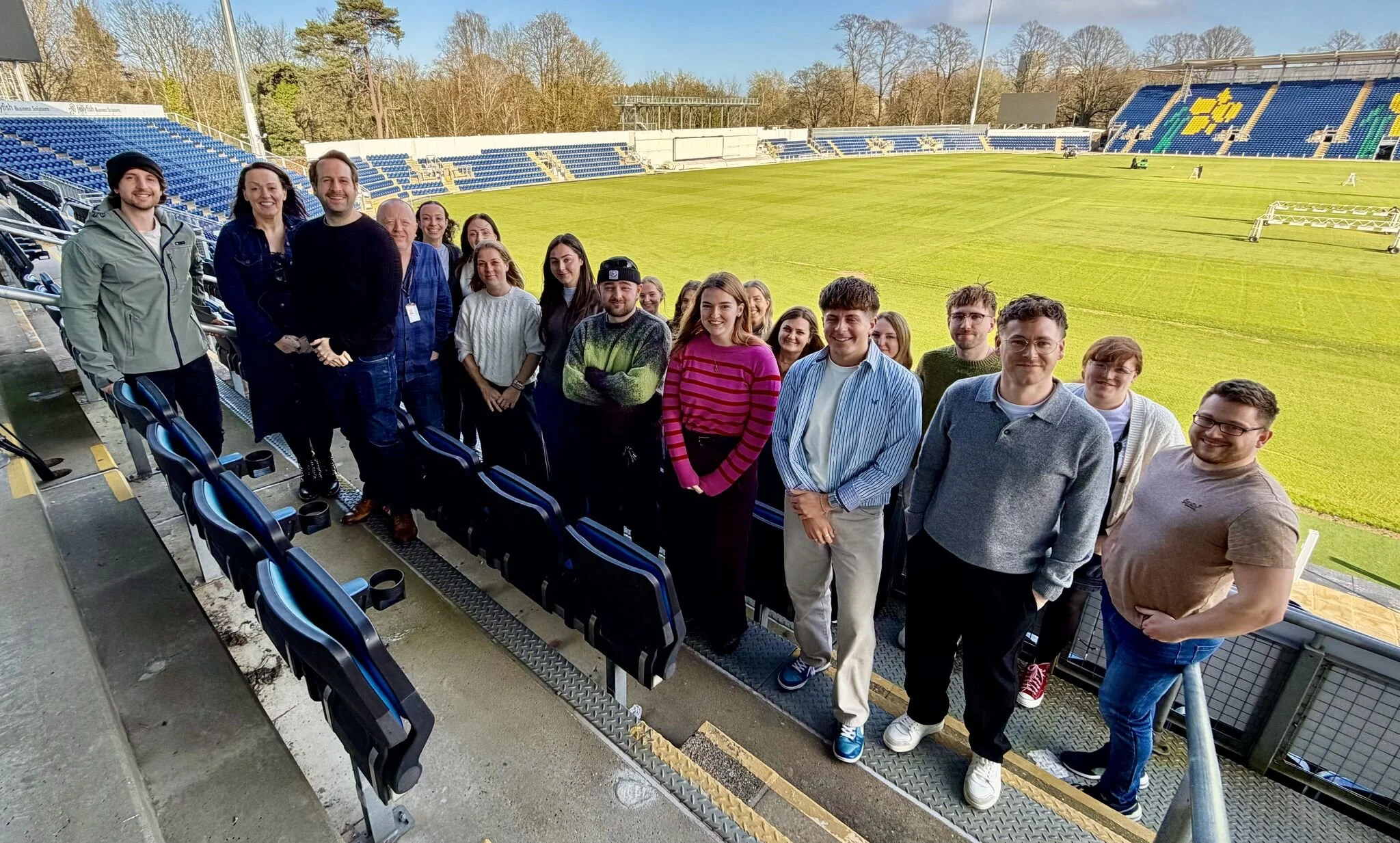
We were in Cardiff last week with the marketing team at Transport for Wales. Sixteen people in a room at a stadium, working through real briefs on real tools, and at some point during the session I said something I've been saying for a while now.
Shit in. Shit out. SISO. The oldest creative truth there is, just wearing new clothes.
I said it in the context of prompting, because the quality of what you get out of these tools is entirely dependent on the quality of what you put in. No exceptions, no AI magic that rescues a vague brief, no shortcut around the hard thinking. Carys Roberts, Chartered Marketer and Marketing Manager at Transport for Wales, went home and posted about it on LinkedIn. She wrote about feeling like she'd been cheating every time she used AI professionally, that the session gave her a more practical perspective on how it fits into real marketing work, and then she landed on this: the biggest takeaway was how much the quality of the output depends on the quality of the input.
She got it immediately. Most people in the room did. The question is why so few organisations are acting like they have.

I've written my fair share of bad briefs
Bad brief in, bad creative out. Anyone who's spent enough time on either side of a client relationship carries this particular scar. And I'll be honest, I've written my fair share of the bad ones. The brief that felt very clear in my head and made absolutely no sense to anyone else in the room. The one that was three pages long and said nothing. The one that was basically a mood board and a prayer.
The saving grace with a bad brief was always that a human was still involved somewhere. Someone who could read between the lines, ask the right question, make an intelligent leap even when the input was genuinely terrible. Good creative people do this constantly and quietly and most clients never realise it's happening. It's basically unpaid consultancy dressed up as execution.
AI has no such generosity. It takes exactly what you give it and runs with full confidence in the wrong direction. The output looks polished and sounds authoritative and can sail through two rounds of amends before anyone notices it doesn't actually mean anything. That's the part that should be keeping marketing directors up at night, not whether the tools work. They work brilliantly. The question is what you're pointing them at, and whether the person holding them has done enough thinking to make that worthwhile.
We are all figuring this out.
Every single one of us.
Here's the thing I want to be clear about. Nobody has this completely sorted. We're in the wild west right now and anyone telling you otherwise is either lying or selling something, usually both.
The landscape is genuinely chaotic. There are hundreds of tools, overlapping capabilities, new releases every week, and no consensus on what good actually looks like yet. Meanwhile IT departments are locking things down with governance policies written by people who've never tried to use AI for meaningful creative work, and marketing teams are being handed Copilot and told to get on with it.
And here's where I'll be direct, because I think the Copilot conversation needs to be had honestly. Copilot is useful. It's genuinely good at summarising a meeting, drafting a routine email, pulling information out of a document you haven't got time to read. For operational tasks that live inside the Microsoft ecosystem it earns its place.
But it is not going to help you write a brand strategy that means something. It's not going to brief a creative team, develop a campaign platform, or produce work that makes a room go quiet for the right reasons. Using it for that kind of work and wondering why the output feels flat is like using a butter knife to do surgery and being surprised it didn't go well. The tool isn't wrong, it's just not the right one for the job.
The real question was never which LLM is best. It's which tool fits the thinking you're trying to do. Claude for strategic reasoning and long-form thinking. ChatGPT for iteration and breadth. Midjourney for visual concept generation. Lovable for building something functional fast. Each one has a context in which it excels and a context in which it produces confident-sounding nonsense.
Knowing the difference is the skill. And most organisations haven't invested in helping their people develop it.
What we actually showed the team
We ran live demos across the full day because there's genuinely no other way to have this conversation. Watching someone use Lovable to build a functional working prototype in the time it used to take to write a scope document lands differently than a slide about what Lovable can do. Seeing Relume handle site architecture so the creative thinking can start where it should actually start changes how people think about where their time goes. Midjourney and Figma Buzz running creative at real scale, and by scale I mean a TV ad concept being extended across formats, channels, and video without rebuilding from scratch every single time, makes the budget conversation look very different very quickly.
Weavy came up in the context of workflow, specifically the reality that the best AI tool in the world is useless if it lives in a separate tab nobody remembers to open. The tools that get used are the ones that sit inside how teams already work.
Every demo landed the same way. Genuine surprise, followed almost immediately by a version of: okay but what if the input was actually good? Which is exactly the right question, and the one most organisations aren't asking yet.

The part nobody wants to say in the
thought leadership posts
Most organisations are not as AI ready as they think they are, and I say that having spent nearly three years running sessions like this, with over 300 senior marketers across sectors. The pattern is consistent. Smart, curious people who've been told in a leadership meeting that the company is leaning into AI, and have been waiting ever since for someone to explain what that actually means on a Tuesday afternoon with a deadline and a client on the phone.
Real readiness isn't about which tools you've licensed. It's about whether your people can think clearly enough to use what's available, whether they understand that prompting is a craft that rewards the same discipline as writing a good brief, and whether the culture inside your organisation gives people genuine permission to experiment, get it wrong in front of each other, and learn from it. Most organisations say they have that culture. Fewer do than believe they do.
The knowledge layer, the quality of human thinking going into these tools, is still the thing that determines whether any of it is worth anything. The most sophisticated AI stack in the world won't save you from unclear thinking. It'll just reproduce it faster and at greater scale.
Which brings me to something we've started paying close attention to over the last year. Because SISO doesn't just affect the quality of your output anymore.
It's starting to affect your costs too.

Part Two: What Unclear Thinking Actually Costs When it Runs at Scale.
Coming next week.
