Wolseley Infrastructure
One partner, finally on paper

Wolseley Infrastructure had four brilliant specialist businesses and one awkward problem. Customers knew each of them by name and had no idea they were the same company. We found the story, then built everything the sales team needed to tell it.
-
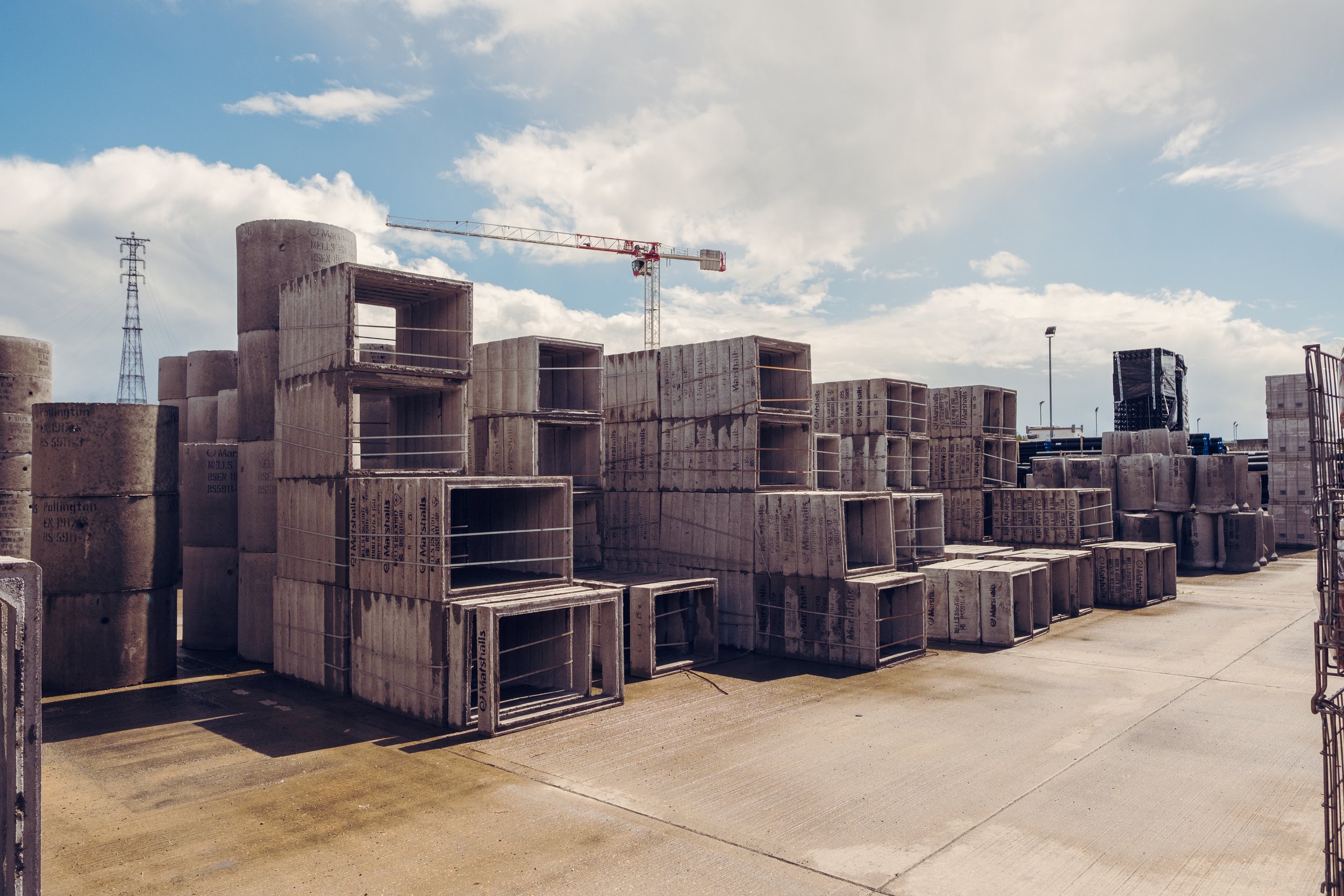
Wolseley Infrastructure keeps the UK's big infrastructure jobs supplied. Drainage and civils, water, gas, power, fibre, rail and hire, through four specialist brands: Burdens, Fusion Utilities, JT and BlueBay.
Ask a site manager and they'll know at least one of those names. Ask who owns all four and you'll usually get a shrug. For a business that wants to be the go-to partner on a whole project, that shrug is expensive.
The team wanted to win more of the work on the country's biggest programmes. They had the people, the stock and the branches. What they needed was one simple way of saying so, and the tools to say it everywhere.
-
We started by listening. Long conversations with the sales leadership, the people who look after the national accounts and the teams behind them. We wanted to understand how big contractors actually buy, who has a say, and where Wolseley Infrastructure was missing out.
Three things came through loud and clear.
Big programmes mean a lot of suppliers. Every extra relationship is another call, another invoice, another thing to chase. Fewer of them is worth a lot to a buyer.
The brands were famous one at a time. The group behind them barely registered.
The sales team had great conversations and very little to leave behind. The story lived in their heads and in the odd slide deck.
So the strategy was easy to say out loud. Start with the customer's headache, complex delivery, and make Wolseley Infrastructure the thing that eases it. One partner. One relationship. Everything a programme needs.
The line came straight out of that thinking, and the client signed it off two days after the brief: Complex infrastructure. Simple delivery.
-
Once the story was right, the deliverables got a lot easier. Each one tells the same story, cut to the length of the person reading it.
For the meeting: tailored contractor decks. One shared template, adapted for each major account, so every conversation starts from what that customer cares about. Their priorities first, Wolseley Infrastructure's proof second.
For the decision makers: the capability guide. Twelve pages for the people who sign off suppliers on national programmes. One idea per page, plenty of space, and nothing that reads like a catalogue. It covers the promise, the four specialists, the national network and who to call. A simple graphic device runs through it, lots of disciplines coming together into one, which is the whole proposition in a picture.
We shot nothing new. The photography came from two existing Wolseley shoots, graded to look like one, and framed so no faces or third-party logos appear. After the first design the client asked for more breathing room. Less red, more white space. We gave it to them.
For the people on site: the two-pager. Site managers and engineers give a document about thirty seconds, so this one is mostly pictures. Page one introduces the four brands as one group. Page two shows how much of a job they can cover and gives one person to ring. We opened it with the line we'd heard in every conversation: you know the names, turns out they're all one outfit.
It's built as a template, so Wolseley can swap in any contractor's logo and contact and send it out themselves. Brief to finished artwork took eight working days.
For the sellers: an AI prototype. Wolseley already paid for a lot of information about the market. Who's building what, where and when. Most of it was hard to get at and harder to read, so it rarely made it into a sales conversation.
We used AI build tools to make a clickable prototype that shows what happens when that information is put in a shape people can use. A simple view of each account. The projects worth a call this week. The people worth talking to. A few talking points ready for the next conversation, and a short monthly briefing for the leadership team. A mountain of data becomes a short list of things to do on Monday morning.
Building it quickly meant the team could click through the idea and react to it before anyone committed budget. Alongside it, we write a regular market briefing that keeps the team across what's moving in their sector.
-
Every piece starts from the same strategy, so it all sounds like one company. A deck for the meeting, a guide for the decision maker, a two-pager for the site and intelligence for the seller. Same promise, told four ways.
That's the bit we're proudest of. Sales enablement usually arrives as a pile of separate jobs. Here, one piece of thinking did the heavy lifting, and every deliverable after it was quicker and sharper because of it.
-
Brief to approved creative line: two days
Brief to finished site-team two-pager: eight working days
One strategy and one design system behind every piece Wolseley Infrastructure puts in front of a contractor
[RESULT FROM WOLSELEY: e.g. how the sales team is using the guide, reissues of the two-pager, meetings it has opened]
-
What is sales enablement for a B2B supplier? It's giving the sales team the right material for every stage of a deal. For Wolseley Infrastructure that meant one strategy turned into contractor decks, a capability guide, a site-team two-pager and an AI prototype for account insight.
How do you write a capability guide for national contractors? Start with the buyer's biggest headache, give every page one job, and back it up with real proof. Then make a shorter version for the people on site, who have thirty seconds to spare.
How can AI help a B2B sales team use its market data? We built Wolseley Infrastructure a clickable AI prototype that turns market and project data into a simple view of each account, with the projects, people and talking points worth acting on.
“lorem ipsum dolor sit amet consectetur adipiscing elit nisi deleniti atque quidem maxime et nihil aut et voluptas deleniti facere qui ducimus est sint ”
Bring your brief, we’ll make it loud.